Omega Peptides Australia
Couldn't load pickup availability
Disclaimer
By viewing this page I acknowledge this is for lab research use only. It is not for human or veterinary use, consumption, or therapeutic application. It is not a drug, food, cosmetic, or dietary supplement, and must only be handled by qualified researchers in an appropriate setting.
Thymosin Alpha-1 (10mg) — Immunomodulatory Thymic Peptide Research Compound
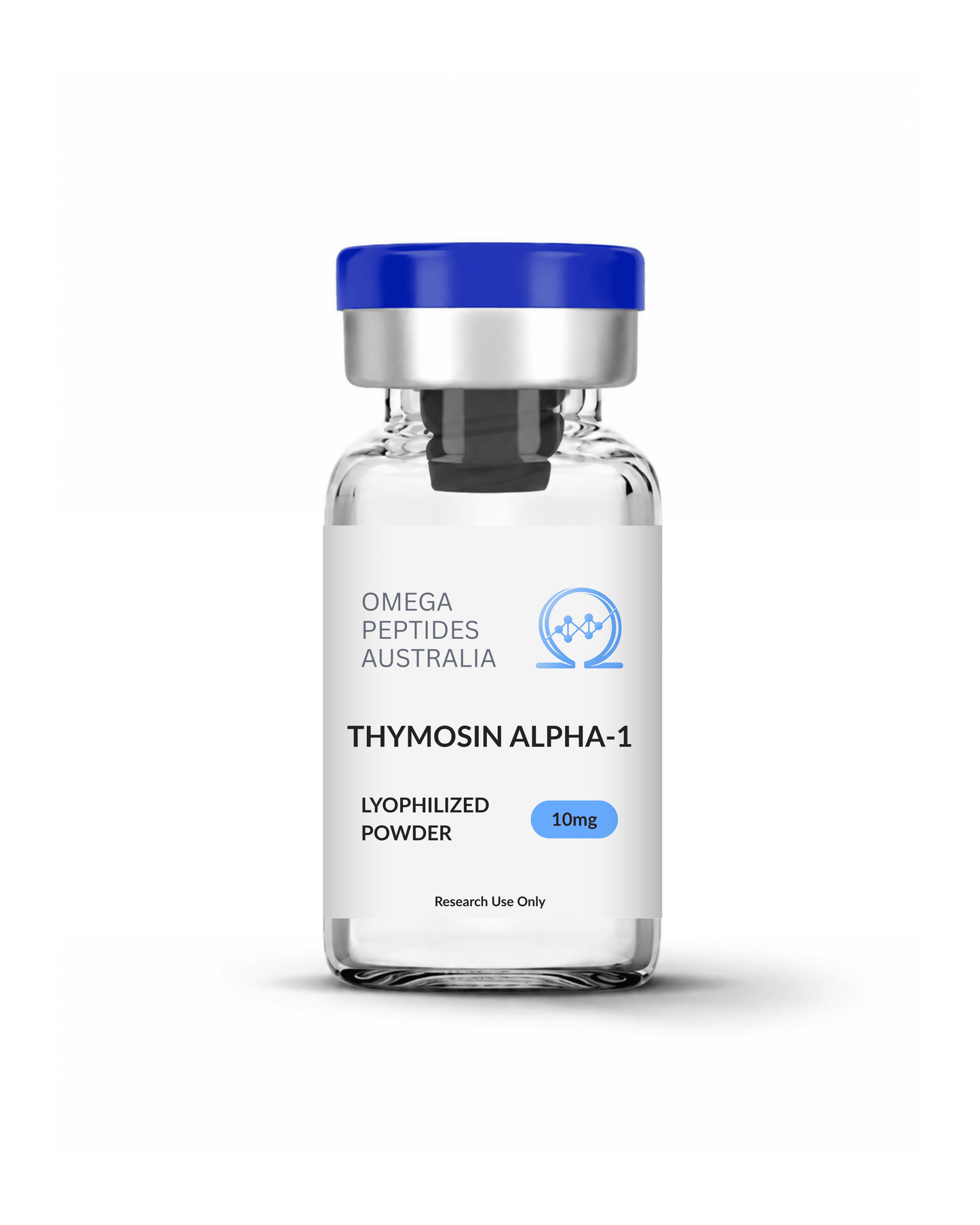
Thymosin Alpha-1 (10mg) is stocked in Australia by Omega Peptides Australia and dispatched the same business day on orders before 12pm, each batch backed by an independent certificate of analysis. Also searched as Ta1, thymalfasin, thymosin a1 or TA-1, it is a 28-amino-acid thymic peptide studied for immune modulation.
Thymosin Alpha-1 is a 28-amino-acid peptide first isolated in 1977 from thymosin fraction 5, a partially purified extract of calf thymus tissue, and later shown to correspond to residues 2 to 29 of the precursor protein prothymosin alpha. It carries an acetyl group on its N-terminal serine, is strongly acidic because of its many glutamate and aspartate residues, and has a molecular weight of about 3,108 daltons. It is often written as thymosin a1, thymosin alpha 1, TA1 or Tα1, its international non-proprietary name is thymalfasin, and the pharmaceutical form marketed in some countries is sold under the brand name Zadaxin.
Thymosin Alpha-1 is studied primarily as an immunomodulator. The three main research directions are chronic viral infection models (particularly hepatitis B and C), the immune paralysis phase of sepsis, and oncology research where it is examined alongside chemotherapy or immunotherapy. At the cellular level it engages Toll-like receptors, chiefly TLR2 and TLR9, on dendritic cells and other innate immune cells, which promotes T-cell differentiation, shifts cytokine output towards interleukin-2 and interferon-gamma and increases natural killer cell activity.
Omega Peptides Australia supplies Thymosin Alpha-1 as a high-purity (≥99% HPLC) COA-verified lyophilised powder in a sealed sterile 10mg vial. Orders placed before 12pm are dispatched the same day from within Australia, and the batch Certificate of Analysis for every lot is published in our COA library.
Key research areas
- Chronic viral infection models Thymosin Alpha-1 has been investigated in hepatitis B and hepatitis C research for decades, both as a single agent and in combination with interferon-based regimens. The proposed mechanism is a strengthened Th1 response, with more interferon-gamma-producing T cells and greater cytotoxic activity directed at infected hepatocytes, rather than any direct antiviral effect on the virus itself.
- Sepsis and immune paralysis Late-stage sepsis is characterised by immune exhaustion rather than excessive inflammation, and randomised clinical programs in severe sepsis have examined whether thymalfasin can restore monocyte HLA-DR expression and lymphocyte function. Preclinical work suggests it helps dendritic cells recover antigen-presenting capacity after the initial inflammatory surge.
- Oncology support research Thymosin Alpha-1 has been studied as an adjunct in melanoma, hepatocellular carcinoma and non-small-cell lung cancer models, typically to offset chemotherapy-induced immunosuppression. Research measures include lymphocyte counts, NK activity and the balance between effector T cells and regulatory T cells within the tumour microenvironment.
- Vaccine adjuvant research Because it accelerates dendritic cell maturation, Thymosin Alpha-1 has been tested as an adjuvant for influenza and hepatitis B vaccination in populations with weaker antibody responses, including older subjects and haemodialysis patients. The usual end points are seroconversion rate and antibody titre.
- Immunosenescence and thymic involution Thymic output falls sharply with age, and Thymosin Alpha-1 is used in ageing models to ask whether a thymic peptide can partially compensate for reduced naive T-cell production. It is also studied in models of glucocorticoid-induced thymocyte apoptosis, where it antagonises dexamethasone-driven cell death.
- Fungal defence and mucosal inflammation Preclinical work in Aspergillus infection and cystic fibrosis models has looked at the way Thymosin Alpha-1 promotes indoleamine 2,3-dioxygenase activity in dendritic cells, dampening excessive inflammation while preserving antifungal immunity.
How Thymosin Alpha-1 works
Thymosin Alpha-1 does not act through a single dedicated receptor. Its best-characterised targets are Toll-like receptors on innate immune cells, particularly TLR9 in plasmacytoid dendritic cells and TLR2 in myeloid dendritic cells, where it signals through the MyD88 adaptor pathway. Activation leads to dendritic cell maturation, interleukin-12 release and antigen presentation, which in turn drives naive T cells towards a Th1 phenotype and increases production of interleukin-2, interleukin-3 and interferon-gamma. In thymic tissue it promotes the maturation of thymocytes into CD4+ and CD8+ T cells, and it raises natural killer cell cytotoxicity. In parallel, it can induce tolerogenic signalling through indoleamine 2,3-dioxygenase, which is why it is described as an immune regulator rather than a simple immune stimulant.
Pharmacokinetic studies of the pharmaceutical form report peak serum levels roughly two hours after subcutaneous administration, a plasma half-life of about two hours, a return to baseline within 24 hours and urinary excretion of 31% to 60% of the administered amount. Thymosin Alpha-1 should not be confused with thymosin beta-4 (the parent of TB-500), which is an actin-binding tissue-repair peptide with no thymic immune role, nor with thymulin, a zinc-dependent nonapeptide. Thymalin is different again: it is a mixed polypeptide extract of calf thymus rather than a single defined molecule.
Specifications
| Compound | Thymosin Alpha-1 (thymalfasin) |
| Also known as | Ta1, Tα1, thymosin a1, thymosin alpha 1 peptide, thymalfasin (INN), Zadaxin (pharmaceutical brand), TA-1 |
| CAS number | 62304-98-7 |
| Molecular formula | C129H215N33O55 |
| Molecular weight | 3108.3 g/mol |
| Sequence | Ac-SDAAVDTSSEITTKDLKEKKEVVEEAEN-OH (28 residues, N-terminal acetyl) |
| Category | Immune research |
| Purity | ≥99% HPLC, batch COA supplied |
| Form | Lyophilised powder in a sealed sterile vial |
| Vial sizes available | 10mg — $89.99 |
| Storage (lyophilised) | 2–8°C short term or −20°C long term, protect from light and moisture, avoid repeated freeze-thaw |
| Storage (reconstituted) | 2–8°C, use within 28 days |
| Reconstitution | Bacteriostatic water (recommended) |
Available sizes and pricing
Thymosin Alpha-1 is currently offered in a single vial size. Pricing is per vial, with the equivalent per-milligram figure shown so laboratories can compare it with other immune research peptides in the range.
- 10mg vial — $89.99 (about $9.00 per mg)
Multi-vial pricing: 2 vials $161.98 (10% off, $80.99 each), 3 vials $236.22 (12.5% off, $78.74 each), 4 vials $305.97 (15% off, $76.49 each). The discount is applied automatically in the cart.
There is no dedicated kit for this compound, but most researchers add a vial of bacteriostatic water for reconstitution, and the 10mL size covers several vials.
Quality and COA verification
Every batch of Thymosin Alpha-1 sold by Omega Peptides Australia is independently tested by Janoshik Analytical, with HPLC used to confirm purity of ≥99% and mass spectrometry used to confirm that the measured mass matches the expected molecular weight of thymalfasin. A Certificate of Analysis is issued for each batch and can be viewed in the COA library, where the batch number on your vial can be matched to the corresponding report. The peptide is supplied lyophilised in a sealed sterile vial, because the freeze-dried form is far more stable than a solution and tolerates transit well. Vials are packed in protective outer packaging for domestic transit.
Frequently bought together
- Bacteriostatic Water (10mL) — $29.99, the standard diluent for reconstituting lyophilised peptides.
- Thymalin (10mg) — $89.99, the polypeptide thymus extract most often compared with Thymosin Alpha-1 in immune research.
- LL-37 (5mg) — $119.99, the human cathelicidin antimicrobial peptide studied in innate immunity models.
- KPV (10mg) — $79.99, an alpha-MSH tripeptide fragment used in inflammation research.
Research guides
- Peptide storage guide: how to store lyophilised peptides properly
- COA testing explained for research peptides in Australia
- Peptide reconstitution calculator
- Certificates of Analysis library
Frequently asked questions
What is Tα1?
Tα1 (also written Ta1 or TA1) is the common abbreviation for Thymosin Alpha-1, a 28-amino-acid peptide originally isolated from calf thymus tissue. The Greek letter alpha distinguishes it from the thymosin beta family, which includes thymosin beta-4. In research literature Tα1 is the standard shorthand, while thymalfasin is the international non-proprietary name used for the pharmaceutical version.
What is Thymosin Alpha-1?
Thymosin Alpha-1 is an N-terminally acetylated 28-residue peptide derived from prothymosin alpha, with a molecular weight of about 3,108 daltons. It is one of the most extensively studied thymic peptides and is classed as an immunomodulator. Omega Peptides Australia supplies it as a lyophilised research-grade powder in 10mg vials for in-vitro laboratory use, with every batch verified by an independent Certificate of Analysis.
What is Thymosin Alpha-1 also known as?
It is also written as thymosin a1, thymosin alpha 1, thymosin α1, TA1, Ta1 or Tα1, and searches for thymosin alpha 1 peptide or thymosin alpha-1 10mg refer to the same compound. Its international non-proprietary name is thymalfasin, and Zadaxin is the pharmaceutical brand name used in the countries where the medicine is approved. It is not the same molecule as Thymalin or thymulin.
How does Thymosin Alpha-1 work?
In research models Thymosin Alpha-1 activates Toll-like receptors TLR2 and TLR9 on dendritic cells, driving them to mature and present antigen. This pushes T-cell development towards a Th1 profile, increases interleukin-2 and interferon-gamma, enhances natural killer cell activity and supports thymocyte maturation into CD4+ and CD8+ cells. It also induces indoleamine 2,3-dioxygenase in dendritic cells, which gives it a regulatory rather than purely stimulatory character.
What does the research show about Thymosin Alpha-1?
Research spans hepatitis B and C programs, randomised trials in severe sepsis, adjunct studies in several cancers, vaccine adjuvant work in older and immunocompromised subjects, and preclinical models of fungal infection and cystic fibrosis. Across these settings the consistent finding is an increase in T-cell number and function alongside a moderation of excessive inflammatory signalling. Results vary by model, and the compound remains investigational in most jurisdictions.
Can I buy Thymosin Alpha-1 at Chemist Warehouse or a pharmacy in Australia?
No. Thymosin Alpha-1 is not a registered medicine in Australia and is not stocked by Chemist Warehouse, Priceline or other retail pharmacies. The pharmaceutical form, thymalfasin (Zadaxin), is approved in a number of countries in Asia and Europe but is not on the Australian Register of Therapeutic Goods. The lyophilised research-grade compound sold here is a different product, supplied only for laboratory use.
Can Australian compounding pharmacies supply Thymosin Alpha-1?
Some Australian compounding pharmacies have prepared thymosin alpha-1 for individual patients on a doctor's prescription, but this is an unapproved-medicine pathway that the TGA has placed under closer scrutiny in its 2026 guidance on compounded peptide products, and it is entirely separate from research supply. Omega Peptides Australia supplies the lyophilised research compound for laboratory use and does not compound, prescribe or dispense medicines.
How do you reconstitute Thymosin Alpha-1?
Remove the vial cap, swab the stopper and add bacteriostatic water slowly down the inside wall of the vial rather than directly onto the powder. Swirl gently until the solution is clear; do not shake, because agitation can damage the peptide. Label the vial with the date and concentration, refrigerate at 2–8°C and use within 28 days. Our reconstitution calculator will work out the concentration for any volume of diluent.
How should Thymosin Alpha-1 be stored?
Keep the lyophilised vial at 2–8°C for short-term storage or at −20°C for long-term storage, protected from light and moisture. The freeze-dried powder is stable for months under these conditions. Once reconstituted, store the solution at 2–8°C and use it within 28 days, and avoid repeated freeze-thaw cycles, which degrade the acidic peptide chain faster than steady refrigeration.
Where can I buy Thymosin Alpha-1 in Australia?
Omega Peptides Australia holds Thymosin Alpha-1 in domestic stock, so there is no international shipping delay or customs uncertainty. Orders placed before 12pm are dispatched the same day, every batch carries an independent Certificate of Analysis, and the compound sits within our broader research peptides collection alongside Thymalin, LL-37 and KPV for laboratories running immune research programs.
What does Thymosin Alpha-1 cost in Australia?
A 10mg vial of Thymosin Alpha-1 costs $89.99 from Omega Peptides Australia, which works out to about $9.00 per mg. There is no bundle for this compound at present, but bacteriostatic water is available separately in 3mL and 10mL sizes. Pricing is per vial and per milligram only, as the product is supplied for laboratory use.
How do I get Thymosin Alpha-1 online in Australia?
Select the 10mg vial on this product page, add it to your cart with any bacteriostatic water or syringes you need, and complete checkout. Orders placed before 12pm are dispatched the same day from within Australia with tracked domestic shipping in plain, discreet packaging. A tracking number is emailed once the parcel is lodged, and most metropolitan addresses receive their order within a few business days.
Is Thymosin Alpha-1 legal in Australia?
Omega Peptides Australia supplies Thymosin Alpha-1 strictly for lawful in-vitro laboratory research. It is not approved by the TGA for human or veterinary use and is not sold as a medicine or supplement. Purchasers are responsible for ensuring their intended use complies with all applicable laws, including any state or territory requirements that apply to their laboratory.
What is the difference between Thymosin Alpha-1 and Thymalin?
Thymosin Alpha-1 is a single, chemically defined 28-amino-acid peptide with a known sequence, CAS number and molecular weight, so its identity can be confirmed by mass spectrometry. Thymalin is a polypeptide complex extracted from calf thymus that contains a range of peptides up to about 10 kDa, so it is characterised by its peptide profile rather than a single mass. Both are studied in immune research, but they are not interchangeable.
⚠ For in-vitro research and laboratory use only. Not for human or veterinary use.
Share